
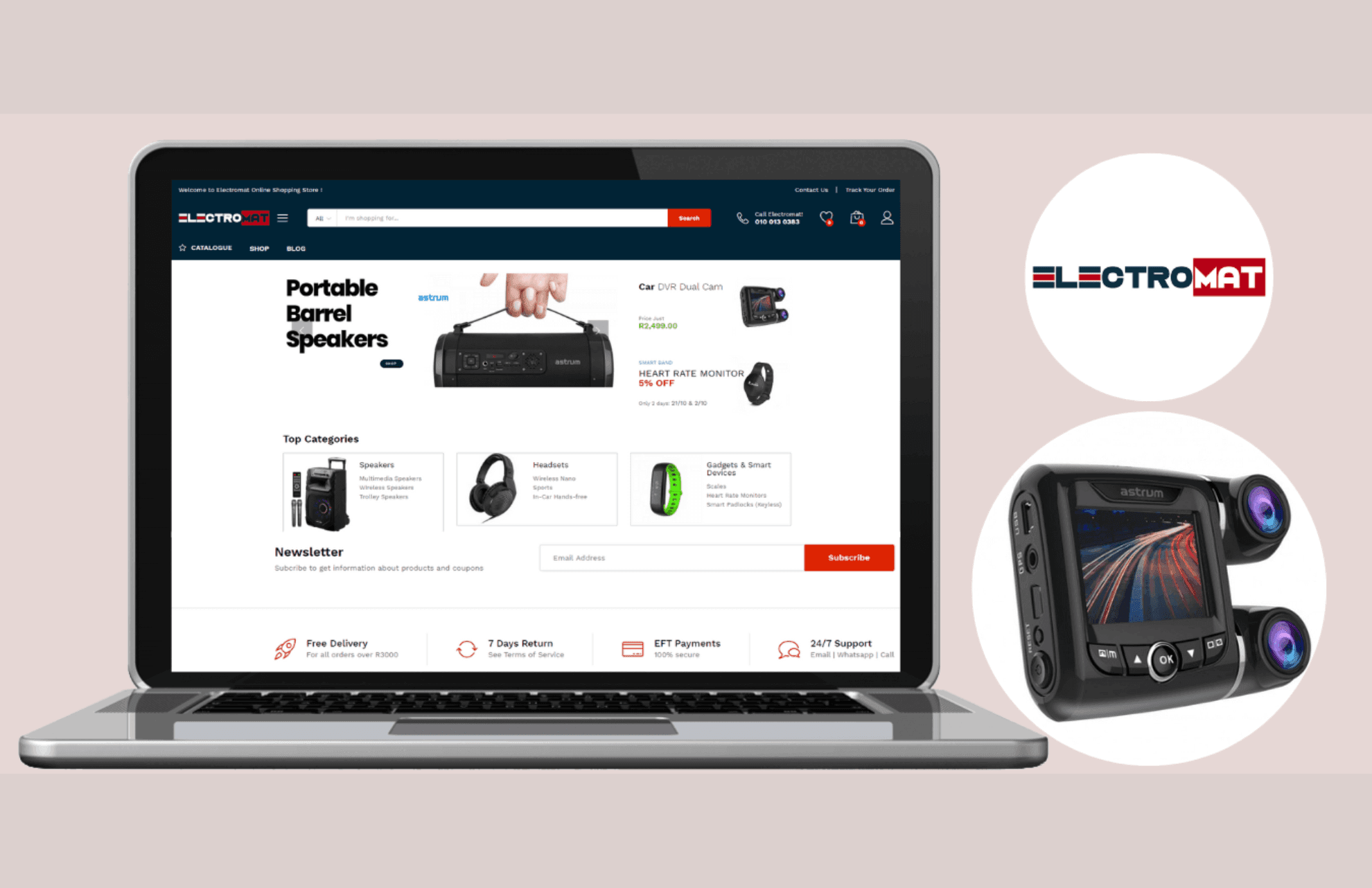
This post is one I’m been looking forward to writing – drum roll, please! – Project Update! Website Development: Electromat
The Electromat project began on October 28, 2019, starting in the early planning phases. It’s true—I was actually planning out the entire project roadmap, from initial concept to final execution. My approach to planning is straightforward yet effective, guiding each step from start to successful completion. By following this method, I’m able to achieve results that align closely—often 100% or more—with my initial vision, while occasionally uncovering unexpected and valuable insights along the way.
In my recent client review post, I mentioned this company briefly, but I didn’t dive into specifics about the work I was doing for them. In fact, my role went beyond basic design; I was tasked with developing their full website, which included handling domain registration, setting up website hosting, and creating a cohesive online presence.
Website Development: Electromat
From the beginning, this project was about more than simply putting together a website—it was about establishing a solid digital foundation for the brand. I focused on building a seamless, user-friendly experience that would meet both Electromat’s business goals and the needs of its clients. As part of the planning phase, I dedicated time to research and identify the essential features and tools that would give the site a professional edge, from optimized page layouts to reliable hosting.
Each stage of development followed my methodical approach, ensuring every component was carefully designed and implemented. This structured method also allowed for flexibility, so as new ideas emerged or requirements shifted, I was able to integrate them without disrupting the project’s momentum. For example, as I worked on the layout and functionality, I found opportunities to enhance user experience, incorporating modern design elements and responsive features that made the site engaging across different devices.
When it came to domain registration and hosting, I wanted to ensure that Electromat’s site had a strong foundation and reliable performance. Choosing a reputable hosting provider and setting up the domain with long-term growth in mind allowed the site to function smoothly from launch, and it gave the company room to scale as its needs evolve. The end result was a polished, professional website that not only captured the company’s brand identity but also positioned it well in the digital space.
Website Development: Electromat
Reflecting on the Electromat project, it’s clear how essential thorough planning is for a successful outcome. Each phase—from the initial brainstorming and project outline to domain setup and final design—was tailored to meet Electromat’s unique needs, and the project’s success was a direct result of this structured approach. By keeping each step focused yet flexible, I was able to deliver a final product that aligned with my goals and exceeded the client’s expectations, laying the foundation for a strong and scalable online presence.
Find the Electromat shop here and on Instagram
Let’s get to the actual project update for this website design project
There are many moving parts when it comes to creating a website for someone (or a company), and it gets even more complicated because you don’t know what the client really wants. You may know what they need, and can cater to it but “want” and “need” seldom go together. The best way to avoid frustrations is to go back to my first post about standing your ground without suffocating someone else‘s creative mind space. There will be times when you feel you know what’s best, and there will be times when your client feels he’s more knowledgeable.
Creating a website is a complex process, with many moving parts and layers of decision-making. When you’re tasked with building a site for a client—whether for an individual or a company—there’s a blend of creative, technical, and strategic considerations that can make the project both exciting and challenging. One of the main hurdles in this process is that often, the client may not fully know what they want. They may have ideas about what they need, or they may trust you to tell them what they need, but “want” and “need” don’t always align smoothly. As a developer or designer, balancing these differing perspectives is crucial. Learning how to navigate this relationship is as essential as technical skills, especially when trying to create a site that fully satisfies the client’s vision.
Website Development: Electromat
This is where clear communication, empathy, and standing firm on certain decisions come into play. Early on in the project, setting clear boundaries is crucial to ensuring everyone feels heard and valued without suffocating the creative space. The goal is to find that balance where you can maintain your expertise and express your ideas, while also giving the client room to explore their own vision. It’s about standing your ground on important matters without shutting down the client’s creative process.
It’s inevitable that you and the client will occasionally have different opinions. As the professional, there may be times when you feel confident that you know what’s best for the project based on your experience and understanding of design, usability, or functionality. However, there will also be moments when your client feels strongly that they know what’s best, too, especially if they have a specific vision or brand image in mind. In these moments, it’s essential to remember that both you and the client ultimately want the same outcome: a successful, functional, and visually pleasing website. You’re both working towards that common goal, even if you might have different ideas on how to get there.
Rather than dismissing their ideas outright, a more productive approach is to explore ways to visually demonstrate your concepts. Clients often need to see an idea in action to fully understand its benefits or drawbacks. Preparing visual presentations, mock-ups, or demos can take some extra time and effort, but it’s an incredibly effective way to bridge the gap between your ideas and their vision. These visual aids allow clients to grasp what you have in mind and make it easier to have a meaningful conversation about the project’s direction. By presenting your concepts in a tangible way, you’re not just telling them what you envision but showing them. This approach fosters collaboration and mutual understanding, which can lead to a smoother project process.
One key aspect of these presentations is that they create a shared language between you and the client. A common challenge in web development is that the language of design, functionality, and user experience can be technical, and clients might not always be familiar with these terms or concepts. Visual presentations eliminate some of these barriers. With images, layouts, and designs to point to, you can show how the website might look or feel without relying solely on words. This can help clients feel more involved and engaged in the process, giving them confidence in your expertise while still feeling like they have a say.
Website Development: Electromat
Sometimes, you might still run into a situation where, despite your best efforts, the client remains fixed on an idea that you feel won’t benefit the site. In these cases, it’s essential to stay calm and approach the conversation with an open mind. Rather than framing it as a disagreement, try framing it as a shared problem-solving session. For instance, if the client wants a feature that you feel might slow down the site or distract from its main message, you could explain your concerns in terms of user experience or functionality. Offer alternative solutions that might meet the client’s goals without compromising the site’s effectiveness.
In my experience, it’s often a matter of “show, don’t tell.” When clients see what an alternative could look like or understand why a particular element might affect the site’s performance, they’re more likely to trust your guidance. Presenting visual evidence or data-backed examples from other successful sites can make all the difference in helping them understand the value of your recommendations.
Of course, every project is different, and each client has their own unique set of needs and preferences, and this was the same with Electromat. Some clients are hands-on and want to be involved in every step, while others are more laid-back, preferring to let you take the reins. This brings me to one particular project that turned out to be relatively straightforward, mainly because the client was clear, communicative, and had a strong idea of what he wanted. He came to the table with a clear vision, knew his brand well, and was articulate about the elements he wanted on his website. This level of clarity from a client can make all the difference in the development process, as it allows you to focus on refining their vision rather than spending time figuring out what they’re hoping to achieve.
Working with Electromat who knows what they want doesn’t mean the process will be entirely smooth, but it does simplify some aspects. For example, when you don’t have to guess at their preferences or clarify basic ideas, you can devote more time to enhancing the design and functionality. In this particular case, because the client had a clear sense of direction, it allowed me to move forward with confidence, knowing that my efforts would align with his goals. He was also open to suggestions, which created a collaborative dynamic where we could build off each other’s ideas without any tension or miscommunication.
In the end, this project served as a reminder that every client relationship is different and that flexibility and communication are key. When you’re able to communicate effectively, stand your ground on essential design principles, and show clients the benefits of your ideas, you’re more likely to create a website that everyone is happy with. And when a client comes in with a clear vision, it can be a gift to the project, allowing you to skip over some of the initial guesswork and dive straight into bringing that vision to life.
Website Development: Electromat
Website development isn’t just about code, design, or functionality; it’s about understanding people, learning to navigate different perspectives, and creating something that truly reflects the client’s goals. Each project teaches you something new, and each client brings a fresh perspective that can make the work both challenging and rewarding. In the end, a successful website is the product of teamwork, open-mindedness, and a shared commitment to a common goal. And when it all comes together, you’re left with a website that not only meets but often exceeds the client’s expectations, making the entire journey worthwhile.
You’re in charge again, Brain… (of Pinky and The Brain fame) – I don’t know why I have to explain this but there you go
My process is extensive and long… I sometimes find that I’m the only one who enjoys it (I wonder why?) but it gets things done.
Sisanda
Look at the summary of the basic stages:
Also used in Website Development: Electromat Project
- Receive a brief from the client
- Study and review the brief
- Several meetings (telephonic or video or in-person) to get more details of the project
- Review, and actually start to feel the actual texture of what the client wants
- Think about how to best work to get to the results
- Draft a plan (checklist, really)
- Review the plan
- Create a tangible timeline
- Put your plan into a pleasantly visual format/presentation (see example below)
- Send presentation to the client (seeing is believing, did I say this already?)
- Make sure that your presentation has clear details and a timeline (seeing is believing – I can’t stress this enough!)
- Voila! You have a happy client
- A client who understands what is going on in the background (your head); will leave you alone to focus on the work
- You have all the time in the world (until your deadline is reached) to mold your ideas into reality
- You complete the project and become a VA superstar!
Check out the Virtual Work Manager Blog and subscribe – no spam, I promise!